What the Supplement Aisle Isn't Telling You: Decoding Vitamin and Wellness Labels Before You Buy
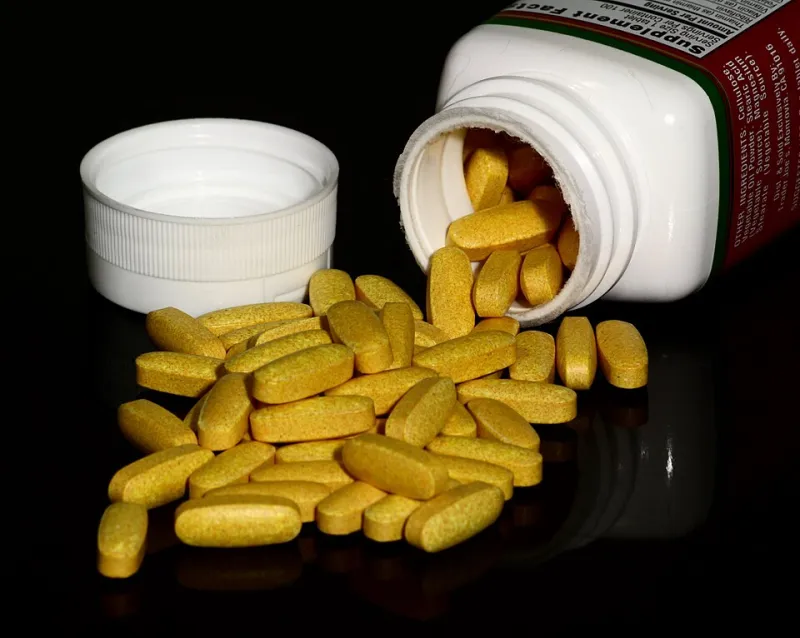
Photo: Ragesoss, CC BY-SA 3.0, via Wikimedia Commons
Walk into any pharmacy, grocery store, or big-box retailer in America, and you will encounter an overwhelming wall of bottles, pouches, and blister packs promising sharper memory, stronger immunity, deeper sleep, and faster metabolism. The supplement industry in the United States generates over $50 billion in annual sales — and yet the regulatory framework governing what manufacturers can print on those labels is strikingly permissive compared to the standards applied to prescription medications.
Understanding the gap between what the law requires and what marketing departments choose to emphasize is not a matter of cynicism. It is a matter of informed consumer health.
The Regulatory Divide: Supplements vs. Pharmaceuticals
Prescription and over-the-counter drugs in the United States are regulated under a pre-market approval system administered by the Food and Drug Administration (FDA). Before a pharmaceutical product reaches pharmacy shelves, its manufacturer must demonstrate, through rigorous clinical trials, that the drug is both safe and effective for its intended use. The FDA reviews that evidence and either approves or denies the application.
Dietary supplements operate under an entirely different framework. The Dietary Supplement Health and Education Act of 1994 (DSHEA) effectively shifted the burden of proof. Under this law, supplement manufacturers are not required to demonstrate efficacy before bringing a product to market. The FDA does not approve dietary supplements. Instead, the agency can act only after a product is already on shelves — and only if it can demonstrate that the product poses a significant risk to public health.
This distinction carries profound consequences for consumers. A supplement can be sold nationally for years before regulators have the resources or evidence to intervene, even if its health claims are unsupported.
What the Label Is Actually Allowed to Say
Federal regulations do permit supplement manufacturers to include what are called structure/function claims on their labels. These are statements asserting that a product affects the normal structure or function of the human body — for example, "supports healthy joints" or "promotes cardiovascular function."
The critical detail: structure/function claims do not require FDA approval. Manufacturers must notify the FDA within 30 days of first marketing a product with such a claim, and the label must include a disclaimer stating that the claim has not been evaluated by the FDA and that the product is not intended to diagnose, treat, cure, or prevent any disease.
That disclaimer is often printed in small type. The marketing claim is typically displayed prominently.
What manufacturers are not permitted to do is make explicit disease claims — statements asserting that a product treats or cures a specific medical condition. A label cannot legally state that a supplement "treats depression" or "cures arthritis." However, the line between a structure/function claim and a disease claim can be thin, and enforcement is inconsistent.
Decoding Common Label Language
Consumers frequently encounter phrases that carry an air of scientific credibility without the substance to support it. Understanding what these terms actually mean — and do not mean — is essential.
"Clinically studied" indicates that at least one study involving human subjects has examined the ingredient or product. It says nothing about the quality of that study, its sample size, whether it was peer-reviewed, or whether the results were statistically significant. A single poorly designed study technically satisfies this claim.
"Clinically proven" is even more ambiguous. There is no regulatory standard defining what constitutes "proof" in this context. The phrase may imply a level of scientific consensus that does not exist.
"Pharmaceutical grade" has no official FDA definition when applied to supplements. Manufacturers use this language to suggest purity or potency standards equivalent to those applied to drugs — a comparison that is not regulated or verified.
"Natural" carries no enforceable meaning in supplement labeling. Many naturally occurring substances are harmful; many synthetic compounds are safe and beneficial. The word functions primarily as a marketing signal.
"Proprietary blend" means that a product contains a mixture of ingredients listed on the label, but the individual amounts of each ingredient are not disclosed. Consumers have no way to verify whether any given ingredient is present in a therapeutically relevant quantity.
Third-Party Verification: What It Means and Why It Matters
Because the FDA does not approve supplements before sale, some manufacturers voluntarily submit their products to independent testing organizations. Seals from organizations such as USP (United States Pharmacopeia), NSF International, and ConsumerLab indicate that a product has been tested for ingredient accuracy, potency, and the absence of harmful contaminants.
These verifications do not confirm that a product is effective for any claimed purpose. They do, however, provide meaningful assurance that the product contains what the label states, in the quantities listed, without dangerous adulterants. For consumers who choose to use supplements, seeking out third-party verified products is among the most practical steps available.
Red Flags to Watch for When Shopping
Certain patterns on supplement labels and in supplement marketing should prompt heightened scrutiny:
- Testimonials presented as evidence. Personal stories, however compelling, do not constitute clinical evidence of efficacy.
- Claims of a "secret formula" or exclusive ingredient. Legitimate scientific advances are published and peer-reviewed, not proprietary secrets.
- Urgency-based language. Phrases like "limited supply" or "doctors don't want you to know" are common features of predatory wellness marketing.
- Extreme or absolute claims. Any product promising to "eliminate" a condition or "guarantee" results warrants skepticism.
- No contact information or verifiable company address. Reputable manufacturers provide transparent business information.
Practical Steps Before You Purchase
Consumers seeking reliable information about supplements have several accessible resources. The National Institutes of Health maintains the Office of Dietary Supplements (ODS), which publishes evidence-based fact sheets on individual nutrients and compounds. The FDA's MedWatch program allows consumers to report adverse events associated with supplement use.
Before purchasing any supplement, consider consulting a licensed healthcare provider — particularly if you take prescription medications, as interactions between supplements and drugs are well documented and sometimes serious.
The supplement aisle is not inherently a space of deception. Many products contain ingredients with genuine, evidence-supported health benefits. However, the regulatory environment places the responsibility of evaluation squarely on the consumer. Being equipped with the right questions — and a healthy skepticism toward marketing language — is the most effective protection available.