The $1,200 Urine Test: Inside the Lab Billing Loopholes That Turn Routine Screens Into Financial Emergencies
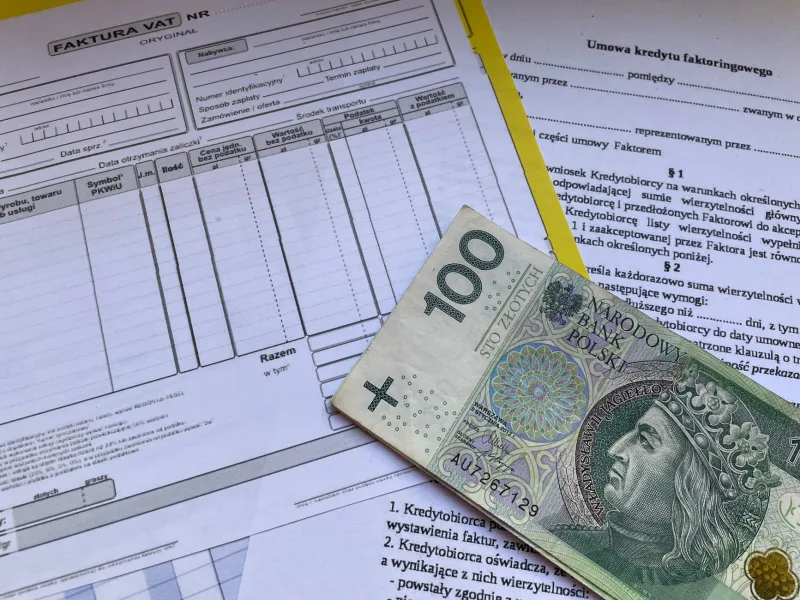
The specimen took less than a minute to produce. The results came back in two days. The bill arrived six weeks later: $1,214.60 for a single urine test.
This is not a hypothetical. Across the United States, patients with employer coverage, marketplace plans, and even Medicare supplements are opening envelopes to find routine laboratory work priced as though it were a minor procedure. Understanding how a basic screen becomes a financial emergency requires looking at three distinct mechanisms: stacked charges, strategic coding, and testing you never asked for.
The Anatomy of a Stacked Lab Bill
A laboratory invoice is rarely one charge. What patients often assume is a single test may appear on the claim as four or five separate line items: specimen collection, handling and transport, the analysis itself, a technical component, and a professional component for a physician who may have glanced at the results for thirty seconds.
Consider a common real-world pattern. A patient visits a hospital-affiliated outpatient lab for a routine urinalysis ordered at an annual physical. The claim that follows includes:
- A specimen handling fee of $45
- A facility charge of $180, applied because the lab sits inside a hospital-owned building
- The urinalysis itself, billed at $95
- A reflex culture billed at $310
- An antibiotic susceptibility panel billed at $580
The last two items are the ones most patients never saw coming.
Reflex Testing: The Consent You Never Gave
Reflex testing is a practice in which a lab automatically runs follow-up tests when an initial result falls outside a reference range — without contacting the ordering physician or the patient. On its face, the logic seems reasonable: if a screen suggests a bacterial infection, confirming it with a culture protects the patient.
The problem is financial and, increasingly, legal. Under federal laboratory billing rules, certain reflex tests require documented physician orders. When labs skip that step, patients are often billed for testing that does not meet the standard for a valid claim. Consumer advocates have documented cases in which patients successfully disputed reflex charges simply by asking one question in writing: Where is the physician order for this test?
Hospitals that have acquired independent labs — a trend that accelerated after 2020 — are the most frequent source of inflated reflex billing, because they can layer facility fees on top of technical fees on top of professional fees for the same specimen.
CPT Code Gaming: When the Test Is Not the Test You Got
Every lab service is billed under a Current Procedural Terminology (CPT) code. The difference between two adjacent codes can be a factor of ten in price.
A few documented patterns worth knowing:
- Panel splitting. A comprehensive metabolic panel (CPT 80053) might run $35–$60. Billing its individual components separately (CPT 80048–80054 range) can triple the total. Splitting is permissible only in narrow circumstances; when done to inflate charges, it is a compliance violation.
- Upcoding complexity. A basic qualitative screen may be billed under a code designated for quantitative or molecular analysis. The patient received the cheap test; the claim reflects the expensive one.
- Unbundling the obvious. Collection, handling, and analysis fees billed as three items when the published fee schedule already incorporates them.
Auditors and state regulators have repeatedly found that a meaningful share of lab claim errors are not random — they fall in the direction that benefits the biller.
Your Pre-Payment Checklist
Before you pay a laboratory bill, work through this sequence:
- Request an itemized statement in writing. A summary bill with one line reading "lab services" is not sufficient. You are entitled to a CPT-level breakdown.
- Match each CPT code to your ordering provider's requisition. Any code with no corresponding order is disputable.
- Ask specifically about reflex testing. Request documentation of the physician order authorizing each follow-up test.
- Check for facility fees. If the lab is hospital-owned, ask whether a lower-cost independent setting was available and whether your plan's cost-sharing was calculated accordingly.
- Compare against your plan's allowed amount. If you were billed the difference between the charge and the allowed amount beyond your cost-sharing, that may be a balance-billing violation.
- Dispute in writing within 30 days and copy your state insurance commissioner. States with active consumer protection enforcement resolve a substantial share of lab billing complaints in the patient's favor.
- Ask for a good-faith price estimate retroactively. Under the federal No Surprises Act framework and various state laws, undocumented price expectations weaken the biller's position.
Why This Loophole Persists
Laboratory billing sits in a gap in consumer visibility. Patients see the phlebotomist for ninety seconds and receive no price disclosure at the point of service. The charge is constructed weeks later, by a billing department the patient will never speak to, using codes the patient was never trained to read.
Until price transparency reaches the specimen cup, the burden of vigilance falls on the person holding the bill. It should not have to. But for now, the difference between a $40 copay and a $1,200 invoice is often nothing more than whether someone asked the right question before writing the check.