Swipe, Save, or Surrender? How Prescription Discount Cards Really Work — and What You Give Up to Use Them
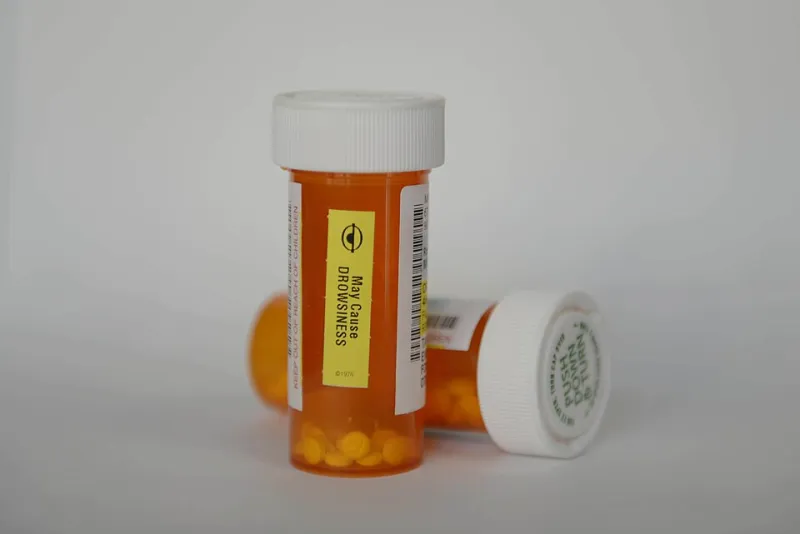
Photo: Airman Valerie Monroy, Public domain, via Wikimedia Commons
Walk into almost any pharmacy in the United States and you will encounter them: brightly colored cards, mobile app banners, and website pop-ups promising dramatic discounts on prescription medications. Programs like GoodRx, RxSaver, NeedyMeds, and dozens of pharmacy-specific loyalty offers have become fixtures of American healthcare consumer culture. Millions of people use them every month, often without a clear understanding of the financial architecture that makes them possible — or the data-sharing arrangements embedded in the fine print.
For an organization committed to trusted health education, unpacking these programs is not merely an academic exercise. The choices Americans make at the pharmacy counter have real consequences for their household budgets, their insurance coverage, and their personal privacy.
What a Prescription Discount Card Actually Is
Despite appearances, a prescription discount card is not insurance. It is a negotiated pricing agreement between a pharmacy benefit manager (PBM) — a middleman company that contracts with drug manufacturers, insurers, and pharmacies — and retail pharmacies across the country. When a consumer presents a discount card, the pharmacy charges the rate that the PBM has pre-negotiated for that specific drug at that location, rather than the standard retail price.
The card issuer earns revenue in one of two primary ways: a small per-transaction fee paid by the pharmacy or PBM, or a commission based on the volume of prescriptions processed through its platform. This is why GoodRx and similar services can offer their cards at no direct cost to consumers. The consumer is not the paying customer — the consumer is, in a meaningful sense, the product.
Understanding this revenue model matters because it clarifies whose interests these platforms are designed to serve. They are built to maximize prescription volume and transaction data, not necessarily to guarantee the lowest possible price in every situation.
When Discount Cards Genuinely Help
That said, prescription discount cards can provide real, meaningful savings in specific circumstances. The scenarios where they tend to perform best include:
Uninsured or underinsured patients. For Americans without prescription drug coverage, retail pharmacy prices can be staggering. A 30-day supply of a common generic medication may carry a sticker price of $80 or more without any form of negotiated pricing. In many such cases, a discount card can reduce that cost by 50 to 80 percent.
High-deductible health plan enrollees. Patients who have not yet met their annual deductible are effectively paying out of pocket for prescriptions. In some instances — particularly for generics — a discount card price will be lower than what the insurer would charge during the deductible phase.
Medications excluded from formularies. Some drugs are not covered by a patient's insurance plan at all. For those prescriptions, a discount card may represent the only available pricing mechanism short of a manufacturer assistance program.
Generic drugs at high-volume pharmacies. Large chains and warehouse pharmacies often have favorable pre-negotiated rates in discount card networks. For common generics, the savings can be substantial and the process straightforward.
When Discount Cards Fall Short — or Backfire
The limitations of these programs deserve equal attention, because the marketing materials rarely address them.
Using a discount card instead of insurance can void progress toward your deductible. This is one of the most consequential misunderstandings among consumers. When a prescription is processed through a discount card rather than through your insurance plan, the transaction typically does not count toward your deductible or out-of-pocket maximum. For patients managing chronic conditions who expect to hit their deductible, routing prescriptions through a discount card could cost significantly more over the course of a year.
Prices vary widely across platforms and pharmacies. There is no single discount card that consistently offers the lowest price on every medication at every location. Studies have found price differences of 20 percent or more for the same drug on the same day between competing platforms. Comparison shopping — using multiple apps simultaneously — is advisable but rarely encouraged by the platforms themselves.
Manufacturer-sponsored programs have income and eligibility restrictions. Many pharmaceutical companies operate patient assistance programs that can reduce or eliminate costs entirely for qualifying individuals. However, these programs typically require income verification, physician documentation, and periodic re-enrollment. They are more administratively burdensome than swiping a card, but for eligible patients, the savings can be far greater.
Specialty and brand-name drugs may not benefit at all. Discount cards are most effective on generic medications. For brand-name drugs, particularly newer specialty medications, the negotiated discount card price may still be prohibitively expensive. In those cases, manufacturer copay assistance cards — which function differently and are tied to the drug company's own marketing budget — may offer steeper reductions, but come with their own set of restrictions and privacy implications.
The Data Question You Should Be Asking
Perhaps the least-discussed dimension of prescription discount card programs is what happens to the information generated when a consumer uses one.
Each transaction creates a data record that can include the medication dispensed, the dosage, the pharmacy location, the date of purchase, and — depending on how the card is registered — identifying information linked to the consumer. PBMs and card issuers may use this data for internal analytics, sell it to third parties in aggregated or de-identified form, or share it with pharmaceutical manufacturers for market research purposes.
The term "de-identified" deserves scrutiny. Research has demonstrated repeatedly that health data sets marketed as anonymous can often be re-identified when cross-referenced with other available data. Consumers who register for a discount card app using their name, date of birth, and contact information should assume that their prescription history is being associated with a persistent profile, even if the platform's privacy policy uses reassuring language.
Federal health privacy law — specifically HIPAA — does not fully protect data generated through discount card transactions in the same way it governs records held by a physician or hospital. PBMs and card issuers occupy a regulatory gray zone that affords consumers less protection than many assume.
Before registering for any discount card program, consumers are encouraged to read the privacy policy carefully, specifically looking for language about data sharing with third parties, data retention periods, and opt-out procedures.
A Practical Framework for Making Better Decisions
Given this landscape, how should a health-conscious consumer approach prescription discount cards? A few evidence-based principles apply:
- Always compare the discount card price against your insurance copay before choosing which to use — especially if you are close to meeting your deductible.
- Use multiple comparison platforms rather than relying on a single app. GoodRx, RxSaver, and Blink Health may each return different prices for the same prescription at the same pharmacy.
- Ask your pharmacist directly. Pharmacists are often aware of pricing programs that are not widely advertised, including pharmacy-specific loyalty pricing that may rival or exceed discount card rates.
- Investigate manufacturer assistance programs if you are taking a brand-name medication long-term and your income may qualify you for additional support.
- Minimize the personal information you share when registering for card programs, and review privacy settings periodically.
The Bottom Line
Prescription discount cards occupy a genuine and sometimes valuable role in the American drug-pricing ecosystem — but they are tools with specific use cases, not universal solutions. They function best as a bridge for uninsured patients or a fallback when insurance coverage is absent or inadequate for a particular medication. They are not a substitute for comprehensive coverage, and they are not free in the fullest sense of that word.
Informed consumers are better-positioned to use these programs strategically rather than reflexively. At CFH Info, we believe that understanding the mechanics behind healthcare financial products — including the business models and data practices that sustain them — is a prerequisite for making decisions that genuinely serve your health and your budget.